


The Modern Marketing Leader’s Toolkit: AI Fluency, Data Literacy, and Business Acumen

Nitin Mahajan
—
October 4, 2026



Ever wondered how some businesses seem to magically attract and keep customers? Chances are, they're using something called a sales funnel. It sounds a bit technical, but really, it's just a way to map out how someone goes from not knowing you exist to actually buying something. Think of it like a path, and your job is to make that path as clear and easy to follow as possible. This guide will break down what a sales funnel is, why it matters, and how you can start building one for your own business.
So, what exactly is a sales funnel? Think of it as a visual map that shows the path someone takes from first hearing about your business to actually buying something. It's not a literal funnel, of course, but a way to picture how a large group of potential customers gets narrowed down to actual buyers. The idea is to guide people through a process, step by step. It helps businesses see where potential customers are in their buying journey and what needs to happen next to move them along. It's a pretty common concept in marketing and sales, and for good reason.
Imagine you're browsing online and stumble upon a new product. That's the very top of the funnel. You might click on an ad, read a blog post, or watch a video. As you learn more and start to think, "Hmm, this might be for me," you're moving down the funnel. You might compare it to other options, sign up for a newsletter, or ask for more information. Each interaction is a step. Eventually, if everything aligns, you make a purchase. This whole sequence, from initial discovery to becoming a customer, is what we visualize with a sales funnel. It helps businesses understand how people interact with them at different points.
Turning a stranger into a customer doesn't usually happen overnight. It's a gradual process. The sales funnel breaks this down into stages. At the top, you're trying to get as many people as possible to notice you. As you move down, you're trying to get them interested and show them why your product or service is a good fit for their needs. Finally, at the bottom, you're helping them make that decision to buy. It’s about nurturing relationships and providing the right information at the right time. This approach helps businesses understand their marketing strategies more clearly and make them work better.
Think of a sales funnel like a journey. People don't just wake up and decide to buy from you. They usually start with a vague idea that something could be better, or a problem they need to solve. Your job is to guide them through that process, step by step. Most sales funnels can be broken down into three main parts: the top, the middle, and the bottom. Each part has a different goal.
This is where it all begins. At this stage, potential customers might not even know they have a problem, or they might just be starting to realize it. They're not looking for a specific product or company yet. Your main goal here is to get their attention and make them aware of a need or a desire they have. Think of it like shouting into a crowded room – you want to be heard.
The key here is to be helpful and informative, not pushy. You're planting a seed, not trying to close a deal.
Okay, so they know they have a problem or a need. Now, they're starting to look for solutions. They might be comparing different options or trying to understand what's out there. This is where you want to show them that you have the answer they're looking for. It's about moving them from "I have a problem" to "I think I know how to fix it, and maybe this company can help."
This stage requires patience. You're building trust and showing your value. It’s like having a good conversation with someone, learning what they need, and suggesting how you can help.
This is the home stretch. The potential customer is now seriously considering buying. They've likely narrowed down their choices and are ready to make a decision. Your goal is to give them that final push, make it easy for them to choose you, and seal the deal. They know they need a solution, and they're looking at you and maybe one or two others.
This is the point where you want to make the purchase as simple and appealing as possible. It’s about removing any last-minute doubts and making it a no-brainer for them to say "yes."
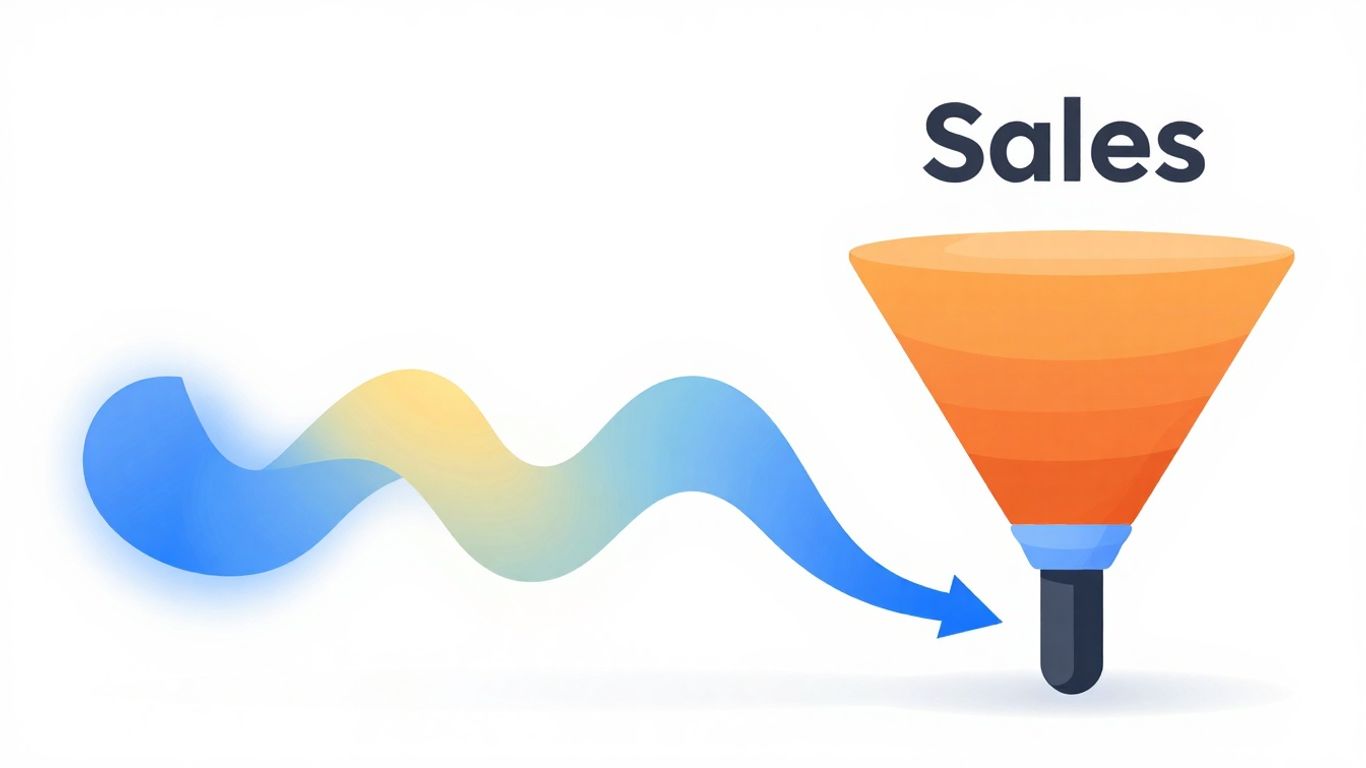
So, why bother with all this funnel stuff? Well, think of it like this: without a funnel, your marketing and sales efforts can feel a bit like throwing spaghetti at the wall to see what sticks. It's messy, inefficient, and you don't really know what's working or why. A sales funnel brings order to that chaos.
One of the biggest wins from using a sales funnel is how it sharpens your marketing. Instead of just blasting out generic messages, you start thinking about who you're talking to at each specific point in their buying journey. This means you can tailor your content and offers. For example, someone just becoming aware of a problem needs different information than someone who's already decided they need a solution and is comparing options.
When you understand the journey, you can create better experiences. This makes people more likely to buy from you, and not just once, but again and again.
Having a defined funnel means your team knows what to do and when. It provides a clear roadmap, so everyone is on the same page. This cuts down on wasted time and effort chasing leads that aren't ready or aren't a good fit. You can focus your energy on nurturing the prospects who are most likely to become customers.
Here's a quick look at how it helps:
It's not just about making the sale; it's about building relationships. A well-designed funnel guides customers smoothly through the buying process. This positive experience can lead to greater satisfaction and loyalty. When customers feel understood and well-cared for from their first interaction to their purchase and beyond, they're more likely to stick around and recommend you to others. It turns first-time buyers into repeat customers and even brand advocates.
Okay, so we've talked about the sales funnel, which is basically the customer's path. But what about our path, the one we follow as sellers? That's where the sales pipeline comes in. It's easy to mix these two up, but they're actually quite different, even though they work together.
Think of the sales funnel as a map for the person thinking about buying something. It shows their journey from "Hey, what's this?" all the way to "Okay, I'll take it." It starts broad, with lots of people just becoming aware of you, and then it gets narrower as people get more interested and eventually decide to buy. It's all about their perspective and how they move through stages like awareness, interest, and decision.
Now, the sales pipeline? That's our to-do list. It's a series of steps we take to move a potential customer from being a stranger to being a paying customer. This includes things like reaching out, qualifying them, giving a demo, sending a proposal, and finally, closing the deal. It's very action-oriented and focuses on what we need to do at each point.
Here's a quick look at how they differ:
It's important to remember that the funnel describes the buyer's experience, while the pipeline outlines the seller's process. They are two sides of the same coin, both necessary for a successful sale.
These two concepts aren't competing; they're partners. The pipeline helps us manage the actions we need to take based on where the prospect is in their funnel. If a prospect is in the "Awareness" stage of the funnel, our pipeline might have a step for "Initial Outreach." If they're in the "Decision" stage, our pipeline step might be "Send Proposal." By understanding both, we can be more organized and effective in guiding people toward a purchase.
Alright, so you want to build a sales funnel that actually works? The very first thing you absolutely have to do is get to know who you're even talking to. Seriously, who is this person? What keeps them up at night? What problems are they trying to solve? If you're just guessing, you're basically throwing darts in the dark. You need to dig in. Think about their age, where they hang out online, what kind of language they use. The more specific you are, the better you can tailor everything you do to grab their attention.
Once you have a good handle on your audience, the next step is to figure out how they actually move from not knowing you exist to becoming a paying customer. This is like drawing a map of their trip. It starts with them becoming aware of a problem or a need, then getting interested in solutions, considering their options, and finally making a decision. Each step on this journey needs to feel natural and easy for them. You're not just pushing a product; you're guiding them. Think about what information they need at each point and how you can provide it without being pushy. A good way to visualize this is by looking at a sales funnel visual, which shows how prospects narrow down their choices as they move closer to a purchase. Understanding this journey is key.
Now that you've mapped out the journey, you need to pinpoint the exact moments where you can really connect with potential customers and nudge them along. These are your key interaction points. This could be anything from a blog post they read, an ad they click on, an email they receive, or even a social media comment. For each of these points, you need a plan. What do you want them to do next? Do you want them to sign up for a newsletter? Download a guide? Request a demo? Make sure your call to action is clear and makes sense for where they are in the funnel. It's also super important to think about what happens after they buy. Keeping customers happy and turning them into repeat buyers is just as vital as getting that first sale. Here are some common interaction points and what you might aim for:
Building a sales funnel isn't a one-and-done thing. It's an ongoing process of watching what works, what doesn't, and making adjustments. Think of it like tending a garden; you plant the seeds, water them, and then you prune and weed as needed to help things grow.

So, we've talked about what a sales funnel is and why it's important. But not all funnels are created equal, right? Businesses use different kinds of funnels depending on what they're trying to achieve. It's like having different tools for different jobs. Let's look at a few common ones you'll see out there.
These are all about building up your contact list. The main goal here isn't necessarily to make a sale right away, but to get people interested enough to give you their email address or phone number. Think of offering a free guide, a checklist, or a webinar in exchange for their contact info. This way, you can start nurturing those leads later on. It's a great way to grow your audience before you even have a product to launch or a big promotion planned. You're essentially collecting potential customers for future marketing efforts.
Now, these are a bit more direct. A tripwire funnel is designed to get someone to make a small purchase, often something really cheap, like a $7 ebook or a discounted starter kit. The idea is that if someone is willing to spend a little money with you, they're more likely to buy something bigger later. It's a way to turn a browser into a buyer with a low-risk offer. After they buy the
So, that's the lowdown on sales funnels. It might seem a bit complicated at first, but really, it's just a way to think about how people go from not knowing you exist to actually buying something. Not everyone makes it through, and that's okay. The main idea is to understand where folks are in their journey with your business and give them what they need at each step. By paying attention to your funnel, you can get better at attracting the right people and helping them become customers. It's not magic, but it's a solid way to make your sales and marketing efforts work smarter, not just harder.
Think of a sales funnel like a path that potential customers walk. It starts with them just hearing about your business and ends with them hopefully buying something. It's called a funnel because it starts wide with lots of people and gets narrower as fewer people decide to buy.
That's a great question! It's called a funnel because it shows how you start with a large group of people who might be interested, and then guide them through steps. Along the way, some people decide it's not for them, so the group gets smaller, like water going through a funnel.
Usually, there are three main parts: the top, middle, and bottom. At the top, you're trying to get people to notice you. In the middle, you're giving them more information to keep them interested. At the bottom, you're encouraging them to make a purchase.
A sales funnel shows the customer's journey and how they move towards buying. A sales pipeline is more about what *you* as a salesperson need to do, like making calls or sending emails, to help the customer move along that journey.
Having a sales funnel helps businesses understand their customers better. It lets them see where people might be dropping off and helps them improve their marketing and sales efforts to make more sales and keep customers happy.
Absolutely! Whether you sell cookies online or offer big business services, you can create a sales funnel. You just need to figure out the steps your customers take from learning about you to buying from you.