


The Modern Marketing Leader’s Toolkit: AI Fluency, Data Literacy, and Business Acumen

Nitin Mahajan
—
October 4, 2026



So, you've got a website, but are you actually turning visitors into buyers? That's where understanding your website funnels comes in. Think of it like a roadmap for your customers, guiding them from just looking around to actually making a purchase. It's not magic, it's a system. We're going to break down how to build and improve these funnels so your website works harder for your business. It's all about making that customer journey as smooth as possible.
Think of your website as a busy marketplace. Not everyone who walks in is ready to buy something right away, right? That's where website funnels come in. They're basically a roadmap that guides potential customers from the moment they first hear about you to actually making a purchase, and hopefully, coming back for more. Without a clear funnel, you're just hoping people stumble upon what they need, which isn't much of a strategy.
A sales funnel isn't just one thing; it's a series of steps. Each step has a job to do in moving someone closer to becoming a customer. We can break it down into a few key parts:
Before you can build a good funnel, you need to know who you're talking to and how they move. Mapping the customer journey means putting yourself in their shoes. What are their problems? What questions do they have at each stage? What information do they need?
Here's a simple way to think about it:
Understanding these steps helps you see your website not just as a place with information, but as a tool that actively guides people. It's about making it easy and logical for them to move from one step to the next.
Honestly, a well-built funnel is like the engine of your business. It takes the raw interest people have and turns it into actual sales. Without it, you're missing out on a huge amount of potential revenue. It helps you:
It's not just about getting a sale; it's about building a consistent way to grow your business over time.
Building a website funnel that actually turns visitors into customers isn't just about having a nice-looking site. It's about creating a deliberate path, a series of steps designed to guide people from just looking to actually buying. Think of it like a well-planned route rather than a random wander. The difference between a website that just exists and one that makes sales is strategic funnel design.
Most successful funnels aren't just one big step; they're broken down into stages. This makes it easier for visitors to move along without feeling overwhelmed. We're talking about a journey, not a sprint. Each stage has a specific job to do.
Here's a common breakdown:
You wouldn't talk to a stranger the same way you'd talk to a close friend, right? The same applies to your website funnel. The content needs to match where the visitor is in their journey. For someone just becoming aware of your brand, you want content that introduces you and highlights a problem you solve. Think blog posts, social media updates, or simple ads. As they move into the interest and consideration stages, they need more detailed information. This could be case studies, product comparisons, webinars, or in-depth guides. The goal is to provide the right information at the right time to build trust and show your value. For example, a visitor in the consideration stage might benefit from seeing how your product helped someone else, so a case study would be perfect. This kind of targeted content helps move people along without them even realizing it. You can find some great tips on optimizing popup timing to capture attention at these various stages.
The FARC framework is a way to make sure your funnel is always focused on the customer. It stands for Focus, Align, Respond, and Convert.
Building a funnel this way means you're always thinking about the person on the other side of the screen. It's about making their experience better, which naturally leads to more sales. It's less about pushing a product and more about guiding someone to a solution they need.
By structuring your funnel with these stages and principles in mind, you create a much more effective path for your visitors, leading to better results for your business.
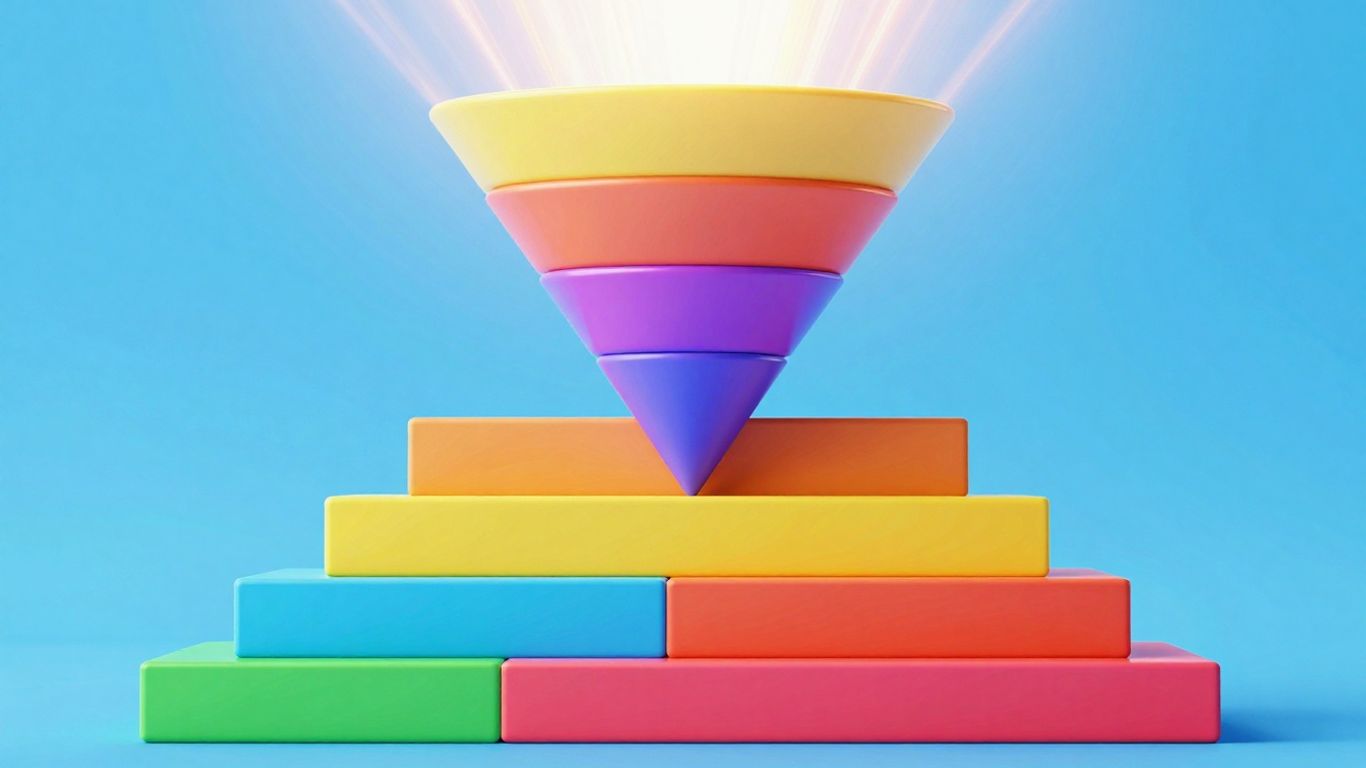
So, you've got your website funnel mapped out. That's a great start, but the real magic happens when you fine-tune each part of that journey. Think of it like tuning up a car; you wouldn't just paint it and expect it to win a race. You need to adjust the engine, the tires, everything, to get peak performance. The same goes for your website funnels.
This is where people first hear about you. It's like walking into a crowded room; you need to stand out. Your goal here isn't to sell them anything yet, but to make them curious. Think about what problems they have and how you might be able to help. Content like blog posts that answer common questions, engaging social media updates, or even helpful infographics can draw people in. The key is to be visible where your potential customers are looking.
Once you've got their attention, you need to keep it. This stage is all about building trust and showing them why you're the right choice. They're looking for more information, comparing options, and figuring out if you're a good fit. This is where detailed product pages, case studies, customer testimonials, and comparison guides come in handy. You want to provide clear, helpful information that addresses their specific needs and concerns.
This phase is critical for building rapport. Visitors are actively researching, and providing them with the right information at the right time can significantly influence their decision-making process. Don't just list features; explain the benefits and how they solve real problems.
This is the moment of truth – the conversion. Whether it's a sale, a signup, or a download, you want to make this as smooth as possible. Remove any friction. A complicated checkout process or a confusing signup form can lose you a customer right at the finish line. But don't stop there! What happens after the purchase is just as important. Follow up with thank-you emails, offer support, and ask for feedback. Happy customers are more likely to return and recommend you to others. This turns a one-time buyer into a loyal advocate.
So, you've got your website funnels set up, and things are moving. But how do you know if they're actually working as well as they could be? That's where data comes in. Looking at the numbers isn't just for the tech wizards; it's for anyone who wants to sell more stuff online. Without data, you're basically flying blind, hoping for the best. The real magic happens when you start paying attention to what the numbers are telling you.
Think of your website analytics as a map. It shows you where people are coming from, what they're doing on your site, and, importantly, where they're deciding to leave. Tools like Google Analytics can show you which pages are popular, how long people stick around, and where they drop off. This isn't just random information; it's a direct line to understanding your customers' behavior. You can see which marketing efforts are actually bringing in interested people and which ones are just noise. It helps you figure out what content is hitting the mark and what's falling flat.
Every funnel has weak spots, or 'leaks,' where potential customers disappear. Maybe it's a confusing checkout process, a form that's too long, or a call-to-action that isn't clear. Analytics will highlight these problem areas. For example, you might see a huge drop-off rate on your pricing page, suggesting people aren't happy with what they see or don't understand it. Or perhaps a specific ad campaign is bringing in lots of clicks but zero sales, meaning the ad isn't matching the landing page experience.
Here are some common leaks to watch out for:
Once you know where your leaks are, you need to fix them. That's where A/B testing comes in. It's a simple concept: you show two different versions of something (like a webpage, an ad, or an email) to different groups of people and see which one performs better. You're not just guessing what might work; you're letting your audience tell you directly.
Here's a basic way to approach A/B testing:
Constantly looking at your data and running tests isn't just busywork. It's how you make sure your sales funnels are always getting better, bringing in more customers, and ultimately, making you more money. It's about making smart, informed decisions instead of just hoping for the best.
So, you've got your website funnel mapped out, but how do you actually get people into it and moving through? That's where digital marketing comes in. It's not just about having a website; it's about actively drawing potential customers in and guiding them along. Think of digital marketing as the engine that powers your funnel.
When someone has a problem or a need, where do they usually go first? Google, right? That's why Search Engine Optimization (SEO) is so important for your funnel. If your website isn't showing up when people search for terms related to what you offer, they'll never even know your funnel exists. It’s about making sure you’re visible at that very first moment of awareness.
Getting found on search engines is like having your store on a busy street instead of a hidden alley. People can't buy from you if they can't find you.
Once you've got someone's attention and they've entered your funnel – maybe by downloading a guide or signing up for a newsletter – you need to keep them engaged. Email marketing is a fantastic way to do this. It allows for direct, personalized communication.
Not everyone who visits your site or clicks on an ad will convert immediately. Sometimes people get distracted, or they're just not ready to buy yet. Retargeting, also known as remarketing, is a way to bring those people back.
The goal is to stay top-of-mind and gently guide hesitant prospects back towards making a decision. By combining SEO for initial visibility, email for consistent nurturing, and retargeting for those who need an extra nudge, you create a powerful, integrated system that drives more sales.
Your sales team is right there on the front lines, talking to people every day. They know what's working and, more importantly, what's not. Making sure they're on board with your funnel strategy isn't just a good idea; it's pretty much a requirement for things to actually work.
Think of training as giving your team the right tools for the job. It's not just about product knowledge anymore. They need to understand how the funnel works, what each stage is for, and how their actions impact where a potential customer is in that process. This means regular sessions, maybe monthly, covering:
This is where things get really practical. Your marketing team might be bringing in leads, but if the sales team isn't following up in a way that makes sense for the funnel, those leads just go cold. It's like passing a baton in a relay race – if the handoff is sloppy, the whole race is affected.
The biggest disconnect often happens when marketing and sales aren't speaking the same language. Marketing might promise one thing, and sales might deliver another, or worse, not follow up at all. This creates a broken experience for the customer and a leaky funnel for the business.
Here’s how to get them working together:
We can't improve what we don't measure, right? For the sales team, this means looking beyond just the total number of deals closed. We need metrics that show how well they're moving people through the funnel.
Tracking these numbers helps identify where the sales team might be struggling and where they're excelling, allowing for targeted coaching and strategy adjustments.
So, we've gone over how to build and improve your website's sales funnels. It's not just about having a nice-looking site; it's about creating a clear path for people to become customers. Remember to always think about your audience, make things easy for them, and keep an eye on what the data tells you. Testing and tweaking are key. It might take some effort, but getting your funnels working right means more sales and a healthier business. Don't be afraid to try new things and see what sticks.
Think of a sales funnel like a path that guides people from first hearing about your business to actually buying something. It's a way to organize how you talk to potential customers, making sure they get the right info at the right time so they decide to become a customer.
Funnels are super important because they help businesses sell more stuff! They make sure you're talking to people who are actually interested and guide them smoothly towards making a purchase. This means less wasted effort and more sales.
Usually, a funnel starts with 'Awareness,' where people first find out about you. Then comes 'Interest,' where they learn more. Next is 'Consideration,' where they compare you to others. Finally, there's 'Conversion,' where they buy, and often 'Retention,' where you keep them as a happy customer.
To make your funnel work better, focus on giving people what they need at each step. Make your website easy to use, offer helpful information, and make the buying process simple. Also, keep track of what's working and what's not, and make changes based on that information.
Optimizing means making your funnel as good as it can be. It involves looking at the data to see where people might be leaving the funnel (like if they abandon their cart) and fixing those spots. It's all about making the path to purchase smoother and more effective.
You can use email and social media to help people move through your funnel. For example, you can send emails to people who showed interest but didn't buy, or use social media ads to bring new people into the top of your funnel. It's about using these tools to guide them along the way.