


The Modern Marketing Leader’s Toolkit: AI Fluency, Data Literacy, and Business Acumen

Nitin Mahajan
—
October 4, 2026



So, you're trying to get more people to buy what you're selling, right? It can feel like a puzzle sometimes. You put out ads, write blog posts, and hope for the best. But what if there was a clearer path? That's where the marketing funnel comes in. Think of it like a map that guides potential customers from just hearing about you to actually becoming a customer. We're going to break down how this whole funnel for marketing thing works, stage by stage, so you can stop guessing and start seeing better results.
So, what exactly is this "marketing funnel" everyone talks about? Think of it as a map for how people go from not knowing you exist to actually buying something from you. It's not just a random process; it's a structured way to guide potential customers. The whole idea is to attract a lot of people at the top and then gently guide them down to become paying customers. It helps businesses see where people are in their journey and what they need at each step.
Every customer's path is a bit different, but generally, it follows a pattern. It starts when someone first becomes aware of a problem they have or a need they want to fill. Then, they start looking for solutions. This is where your business can step in. They might compare different options, learn more about what you offer, and eventually decide if you're the right fit for them. It's about understanding these steps so you can be there when they need you.
While the exact names might change, most marketing funnels have a few key phases:
It's important to remember that the funnel isn't just about making a sale. For many businesses, keeping customers happy after they buy is just as important, if not more so. This leads to repeat business and good word-of-mouth.
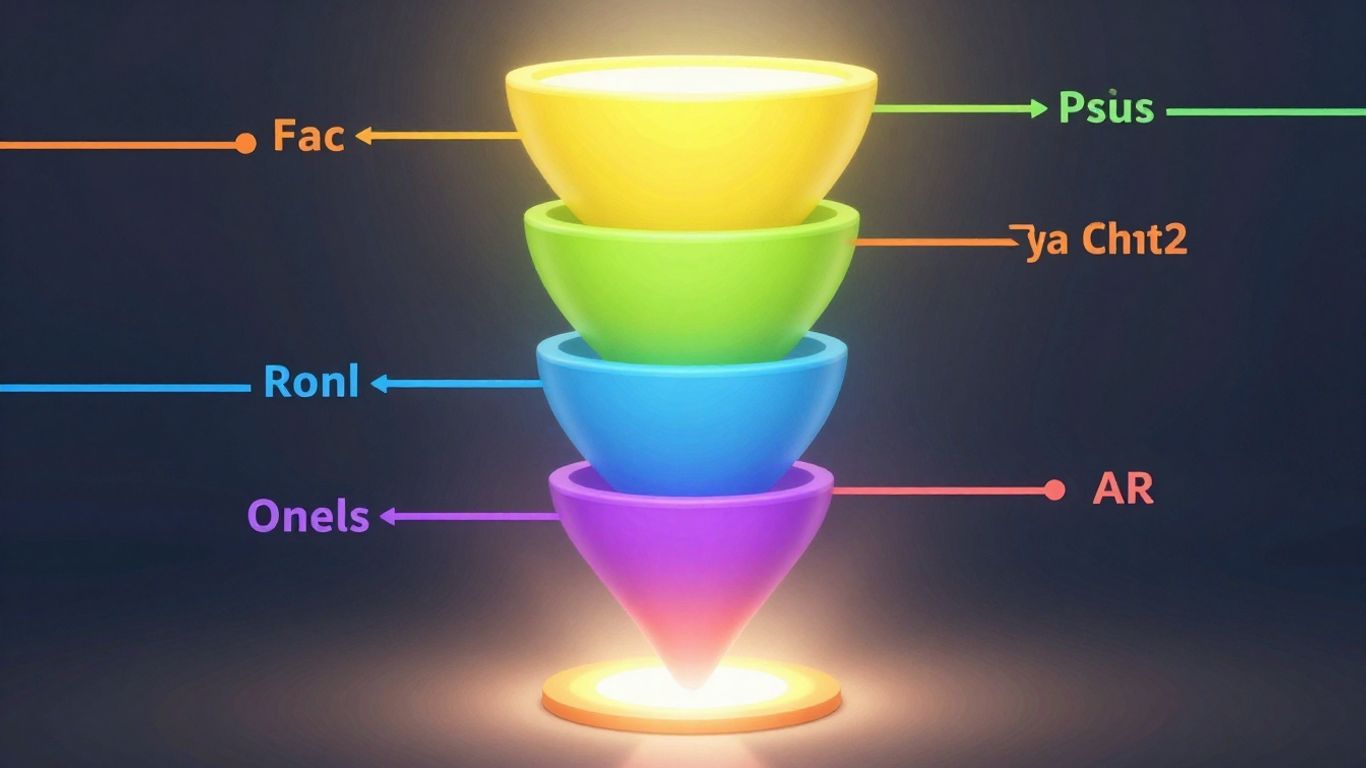
Imagine a wide-mouthed funnel, like the ones you use in the kitchen. At the very top, you pour in a lot of potential customers – people who might be interested. As they move down, some will naturally drop out because they aren't a good fit or aren't ready to buy. The funnel helps you see how many people are moving from one stage to the next. Tracking this flow is key to understanding where your marketing efforts are working and where they might be falling short. It's a visual way to understand the customer's journey and how your business fits into it.
Think of your marketing funnel like a journey. People don't just show up and buy; they move through different phases. Your job is to make that journey smooth and helpful.
This is where you first meet potential customers. They might not even know they have a problem your product can solve, or they might be just starting to look around. The goal here is to get their attention and make them aware that you exist. It's like putting up a big, interesting sign.
The initial interaction is all about making a good first impression and showing that you understand the general landscape of your audience's needs.
Okay, so they know who you are. Now, they're starting to think about solutions. This is the consideration phase. They're comparing options, and you need to show them why you're the best choice. It’s about building trust and demonstrating your value.
This stage is where you build a relationship. You're not just selling; you're educating and guiding them toward a decision. For more on how to guide prospects, check out conversion funnels.
This is the final stretch. They're pretty much ready to buy, but they might need a little nudge. This is where you close the deal. It can be an emotional point for the buyer, so make it easy and reassuring.
Think about what makes someone finally click "buy." It's often a combination of confidence in the product, a good offer, and a hassle-free experience.
So, you've got your marketing funnel mapped out. That's a great start! But just having it isn't enough. Think of it like a recipe – you need to taste and adjust the ingredients to make sure it's just right. Optimizing your funnel means constantly looking for ways to make it work better, guiding more people smoothly from being curious to becoming customers.
This is where things get interesting. You can't really improve what you don't measure. Looking at the numbers tells you what's working and, more importantly, what's not. It’s about understanding how people are actually interacting with your marketing, not just how you think they are.
You're essentially playing detective, piecing together clues from user behavior to find the weak spots in your funnel. Fixing these spots can make a big difference.
Once you know where the problems are, you need to make things easier for the people going through your funnel. A clunky or confusing experience will make people leave, no matter how interested they were initially. The goal is to remove any friction that stops someone from moving to the next step.
Here are a few ways to smooth things out:
Finally, your marketing funnel shouldn't exist in a vacuum. It needs to directly support what your business is trying to achieve. If your main goal is to increase sales, your funnel optimization efforts should focus on the steps that lead directly to a purchase. If you're trying to build brand awareness, you might focus more on the top of the funnel.
By keeping your business goals front and center, you make sure your funnel optimization efforts are actually moving the needle for your company.

Steering someone through your marketing funnel takes more than luck—you need the right material at every stage. Each phase has its own purpose, so your content has to meet your audience where they are, not push them somewhere they aren’t ready to go.
At the top, nobody knows you yet. Your goal here is to answer their questions and spark interest.
Let’s say you sell hiking boots. Don’t start with why yours are the best—explain how to pick the right pair, or share quick tips for first-time hikers. Build trust, help them out, and keep it light. If you do it right, your name starts to become familiar.
People aren’t searching for brands—they’re searching for answers. Be the one with the clearest one, and they’ll remember you later.
Now they recognize you. Maybe they’ve subscribed or downloaded something. This is your chance to show you get their needs.
You don’t need to oversell—show you understand their hesitations. Provide the info to help make a decision, but don’t shove the sale down their throat. For instance, if folks are weighing your hiking boots against others, make a side-by-side table:
Numbers are easy to scan and help build trust.
Alright, they’re close—the home stretch. Here’s where you make it easy to say yes.
If you can, make your offer feel personal. For example: “Hey Sarah, still thinking about those hiking boots? We’ve set aside your size for the next 24 hours!”
If you take the time to match your message to your audience’s mindset at each phase, you’ll find more of them taking that final step.
So, you've built your marketing funnel, and you're guiding people through it. That's great! But how do you know if it's actually working? You can't just guess. You need numbers. These are the metrics that tell you what's up.
This is probably the most obvious one. It's simply the percentage of people who take the action you want them to take. This could be signing up for a newsletter, downloading a guide, or, the big one, making a purchase. A higher conversion rate means your funnel is doing its job better. You'll want to track this at different points in the funnel, not just at the very end. For example, how many people who visit your landing page actually sign up for your free trial? That's a conversion rate.
Where are people coming from, and where are they going once they hit your site? Analyzing traffic flows helps you see if people are entering your funnel where you expect them to, or if they're jumping in halfway through. It also shows you where people are dropping off. If a lot of people leave after visiting a specific page, that page might be the problem. Tools can show you the path visitors take, highlighting any unexpected detours or dead ends.
This metric tells you how much money you're spending, on average, to get one new customer. It's pretty straightforward: total marketing and sales expenses divided by the number of new customers acquired during that period. You want this number to be as low as possible, ideally much lower than what that customer will spend with you over time. If it costs you $50 to get a customer who only ever spends $30, you've got a problem.
Understanding these numbers isn't just about looking at them; it's about using them to make smart decisions. If your conversion rate is low on a specific page, you need to figure out why and fix it. If your cost per acquisition is too high, you need to find ways to market more efficiently.
Here's a quick look at some other important metrics:
Keeping an eye on these metrics will give you a clear picture of how well your marketing funnel is performing and where you need to make improvements.
Think of your marketing funnel not just as a path to a sale, but as a way to build genuine relationships. A value-driven funnel focuses on giving people something useful at every step, making them more likely to trust you and eventually buy from you. It’s about offering increasing levels of value as someone moves closer to becoming a customer.
At the very top of your funnel, you need something to grab attention and get people interested. This is where a lead magnet comes in. It’s essentially a freebie you offer in exchange for contact information, usually an email address. This could be a checklist, a short guide, a template, or even a free consultation. The key is that it solves a small, specific problem for your target audience. This builds initial trust and gives you a way to communicate with potential customers.
Once you have someone’s email, you don’t want to immediately hit them with your most expensive product. That’s a quick way to lose them. Instead, you introduce a low-cost, high-value offer. This is your frontend offer, often called a tripwire. It’s designed to be an easy impulse buy, something that provides significant value for a small price, like $7 or $17. The goal here isn't huge profit, but to turn a lead into a paying customer. This is a critical step because people are much more likely to buy from you again if they’ve already bought from you once.
This initial purchase is a psychological turning point. It signifies a commitment, however small, and primes the customer for future, higher-value transactions. It’s about proving your worth at a low barrier to entry.
After someone has made a purchase from your frontend offer, they’ve shown they trust you enough to spend money. Now you can introduce them to your middle-tier products or services. These are more substantial than your frontend offer and come at a higher price point. Think of a more in-depth course, a workshop, or a coaching package. This stage is about providing more comprehensive solutions to their problems. The progression should feel natural, with each offer building upon the last, creating a clear path for the customer to get more value and for you to increase revenue.
So, we've walked through the whole marketing funnel thing, from when someone first hears about you all the way to them actually buying something. It’s not just a bunch of steps; it’s a way to think about how people become customers. By paying attention to each part – the awareness, the consideration, and the final decision – you can make things smoother for them and better for your business. Don't get overwhelmed by it all. Just focus on making each stage clear and helpful. Keep an eye on what's working and what's not, and you'll get better at guiding folks through the process. It takes practice, but getting this right can really make a difference in growing your business.
Think of a marketing funnel like a path that potential customers follow. It starts when they first learn about your business and ends when they decide to buy something. It's called a funnel because it starts wide and gets narrower as people move closer to making a purchase.
Most marketing funnels have three main parts. First is 'Awareness,' where people first hear about you. Then comes 'Consideration,' where they check out what you offer. Finally, there's 'Decision,' where they decide whether to buy.
A marketing funnel helps businesses understand how customers find them and what makes them buy. It's like a map that shows where people might get stuck or leave, so businesses can fix those spots and help more people become customers.
To grab attention at the start, you can use things like interesting blog posts, social media updates, or ads that show up when people search for things you offer. The goal is to make them aware that your business exists and might have what they need.
Once people know about you, you need to give them more information to help them decide. This is where helpful guides, detailed product descriptions, or case studies showing how others benefited from your product work well. You want to show them why you're a good choice.
You can track important numbers, like how many people move from one stage to the next (conversion rates). Also, see how much it costs to get a new customer (cost per acquisition). Looking at these numbers helps you see what's working and what needs improvement.