


The Modern Marketing Leader’s Toolkit: AI Fluency, Data Literacy, and Business Acumen

Nitin Mahajan
—
October 4, 2026



Alright, let's talk about web funnels. You know, those pathways you create to guide people from just hearing about your stuff to actually buying it. It sounds simple, but getting it right can be tricky. Think of it like trying to get a bunch of cats to go through a specific door – you need to make it super appealing and clear for them. This guide is all about figuring out how to make your web funnels work better, so more people stick around and do what you want them to do. We'll break down the whole process, from the very first hello to them becoming a happy, repeat customer.
So, you're building a website and want people to actually do something, right? Like buy a product, sign up for a newsletter, or download an app. That's where the idea of a web funnel comes in. Think of it like a guided path you create for visitors, leading them from just finding out about you to becoming a customer. It’s not magic; it’s a structured way to think about how people interact with your online presence.
A conversion funnel is basically a map of the steps a potential customer takes from their first encounter with your brand to completing a specific, desired action. This action is what we call a "conversion." It could be anything from making a purchase to filling out a contact form. The "funnel" part comes from the fact that you start with a large group of people at the top, and as they move through the stages, the number naturally gets smaller. Not everyone who sees your ad will click it, not everyone who clicks will sign up, and not everyone who signs up will buy. It’s a way to visualize this natural drop-off and figure out where you can make improvements.
Most web funnels can be broken down into four main stages. It’s a pretty standard model, and understanding these stages is key to getting people to take that desired action.
Imagine someone looking for a new pair of running shoes. They might start by searching "best running shoes" on Google (Awareness). Then, they might click on a few articles comparing different brands and models, maybe even bookmarking a few sites (Interest & Consideration). After reading reviews and checking prices, they decide on a specific pair from your store and click "Add to Cart" (Decision & Action). Finally, they love the shoes, wear them often, and tell their running group about your site (Loyalty & Advocacy).
Understanding this path helps you create content and experiences that speak to people exactly where they are in their decision-making process. It’s about meeting them with the right message at the right time.
This whole process, from that initial search to becoming a happy, repeat customer, is what we aim to guide with a well-built web funnel. It’s a framework that helps you see the big picture and fine-tune each step. For instance, if you're looking to get users from your website into a mobile app, you'd be thinking about a specific type of web-to-app funnel strategy.
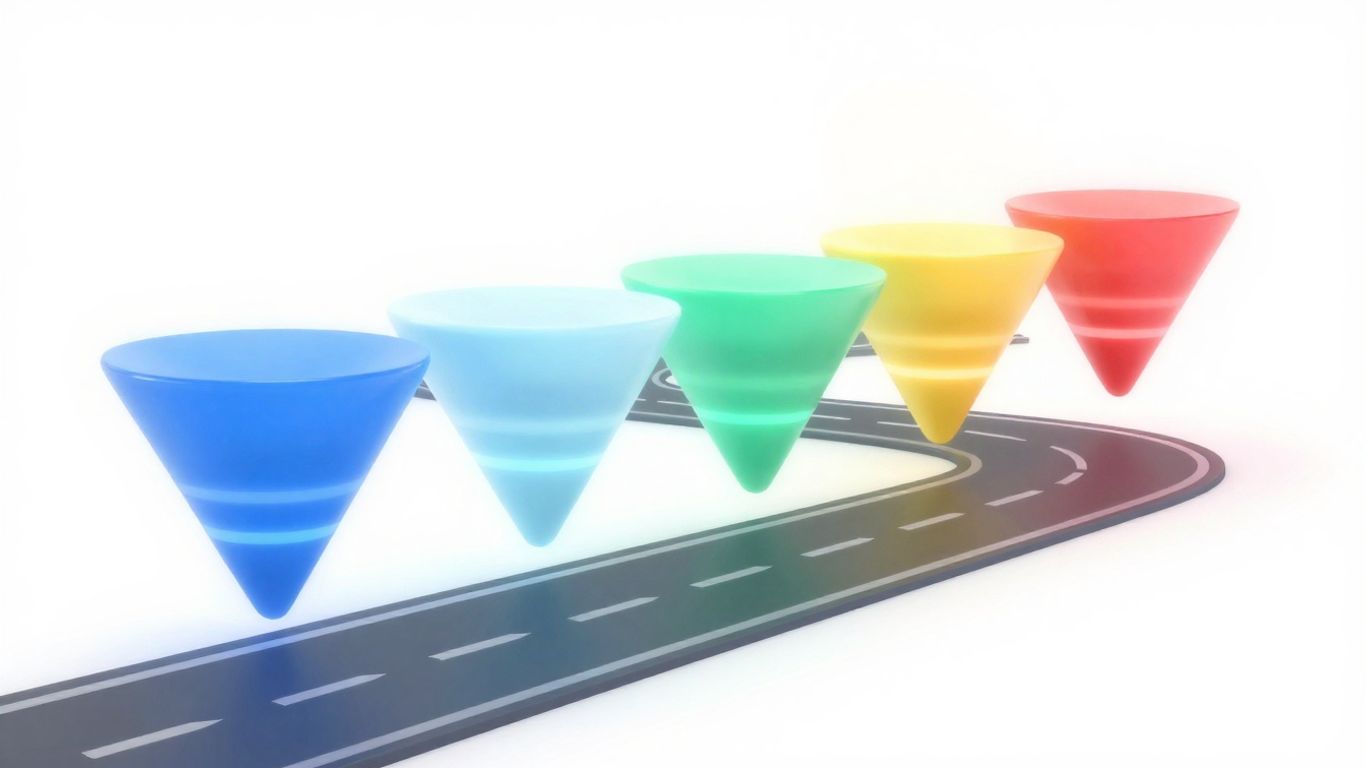
Think of your web funnel not as a single event, but as a journey. Each part of that journey has a different feel and requires a slightly different approach. Getting this right means people are more likely to stick around and eventually become customers.
This is where people first hear about you. They might be looking for a solution to a problem, or maybe they just stumbled upon your content. Your main job here is to get their attention and make them curious. Think about what kind of problems your audience has and create content that speaks directly to those issues. Blog posts, short videos, or even interesting social media updates can work well. The goal isn't to sell them anything yet; it's just to make them think, "Hmm, that's interesting." You want to be the first thing they think of when they realize they have a need.
At this initial point, people are often just exploring. They aren't necessarily looking to buy. Your content should be helpful and informative, not pushy. It's about planting a seed of awareness.
Once someone is aware of you, they might start looking into what you offer more closely. This is the "interest" and "consideration" phase. They're comparing options, trying to figure out if you're the right fit. Now's the time to show them why you're a good choice. Offer more in-depth content, like case studies that show how you've helped others, webinars that explain your services, or free guides that offer deeper insights. You can also start asking for their contact information, like an email address, in exchange for this valuable content. This helps you build a relationship and keep the conversation going.
This is where things get serious. People in the decision stage are ready to choose. They've likely narrowed down their options and are looking for that final push. This is where you highlight what makes you stand out. Think about offering free trials, product demos, or special discounts. Make it easy for them to see the benefits and understand the value. Then comes the action stage – the actual purchase. Make this process as simple and smooth as possible. Remove any unnecessary steps, offer various payment options, and ensure your checkout page is clear and trustworthy. A confusing or difficult checkout can lose you a sale right at the finish line.
So, you've got a web funnel set up, but is it actually doing its job? We're talking about getting people to take that desired action, right? Well, making it work better isn't just about hoping for the best. It's about being smart and making changes based on what's happening.
First off, you need the right people showing up. Sending out a general invitation to everyone is like shouting into a crowded room – you might get some attention, but probably not from the folks you actually want. We need to be more specific. Think about who your ideal customer is. What are they searching for? What problems do they have that you can solve? Focusing on keywords that show real intent, not just popular terms, can make a big difference. Also, look at your ads. Are they speaking directly to the people you want to reach? Testing different ad copy and images can help you find what clicks, literally. It's about getting more of the right eyes on your site, not just more eyes.
Once people are on your site, you can't just leave them hanging. Every interaction needs to feel helpful. If someone downloads a guide, make sure it's actually good and solves their problem. If they're browsing products, show them things they might actually like. This is where things like personalized product suggestions come in handy. It makes people feel like you get them. Also, don't forget about social proof. Showing off customer reviews or case studies builds trust. People want to know others have had a good experience before they commit.
Email is still a big deal for keeping people engaged. But sending the same generic email to everyone? That’s a quick way to get ignored. You need to segment your lists. If someone showed interest in a specific product, send them emails related to that. If they downloaded a certain type of content, follow up with more on that topic. It’s about sending the right message to the right person at the right time. This kind of targeted communication helps move people along without being pushy. It keeps your brand top-of-mind and guides them toward making a decision. Remember, it's an ongoing conversation, not a one-off pitch. You can find some great tips on how to increase conversion rates by looking at examples of successful campaigns here.
Making your funnel work better is a constant process. It involves understanding who you're talking to, giving them what they need at each step, and using smart communication to keep them interested. It's not about one big fix, but many small, informed adjustments.
Looking at the numbers is how you really figure out what's working and what's not with your website's sales process. It’s not just about guessing; it’s about seeing exactly where people are clicking, where they're getting stuck, and where they decide to leave. This information is gold for making things better.
Think of your funnel like a leaky bucket. You're pouring potential customers in the top, but some are slipping out before they reach the bottom. Your job is to find those holes and patch them up. The first step is usually looking at your analytics reports, like those in Google Analytics 4. You can set up reports that show you how many people move from one step to the next. If you see a big drop-off between, say, adding something to a cart and actually starting the checkout, that's a leak you need to investigate. Why aren't they finishing? Maybe shipping costs are too high, or the "checkout" button isn't clear enough. You can also use tools that record user sessions or show heatmaps to see exactly what people are doing on your pages. This gives you clues about why they might be leaving.
Understanding these leaks isn't about blame; it's about finding opportunities to improve the customer's experience and make your funnel more effective. Small fixes can lead to big gains.
Once you know where the leaks are, analytics helps you understand why. It's not enough to know that 70% of people abandon their carts; you need to figure out the reason. This might involve looking at user behavior data more closely. For example, if many users are clicking on elements that aren't clickable, it suggests confusion about what's interactive. If they're not scrolling down to see important information, maybe your page layout needs a rethink. You can also compare how different groups of people move through your funnel. Are mobile users dropping off more than desktop users? Are people coming from social media getting stuck at a different point than those from search engines? These comparisons can point to specific issues that need addressing for different audience segments.
To get the clearest picture, you need all your data talking to each other. This means using tools that can pull information from different places – your website analytics, your customer relationship management (CRM) system, your advertising platforms, and so on. When all this data is in one place, you can see the complete journey a customer takes, from their first click to their final purchase. This unified view helps avoid blind spots and allows for more accurate analysis. It means you can connect a website visit to a sales call and then to a closed deal, giving you a true end-to-end understanding of your funnel's performance. This connected data approach is key to making smart, informed decisions about your marketing and sales efforts.
Think about the last time you felt really good about buying something online. Chances are, it felt like the company got you. That's personalization in action. It's about making each person feel like they're not just another number, but someone with specific needs and interests. We can do this by looking at what someone has browsed, what they've bought before, or even where they are located. This helps us show them things they're actually likely to be interested in, rather than just a generic list.
Here are a few ways to make the journey feel more personal:
Making things personal isn't just a nice-to-have anymore; it's becoming a standard expectation. When customers feel understood, they're more likely to stick around and buy.
Beyond just personalization, the overall feel of using your website or app matters a lot. Every step a potential customer takes, from the first click to the final purchase, should be smooth and easy. If there's a snag, like a confusing form or a slow-loading page, people will just leave. We need to make sure every interaction is as pleasant as possible.
Consider these points:
Getting someone to buy is great, but the job isn't done yet. What happens after the sale is just as important for long-term success. We want customers to come back and tell their friends. This means continuing to provide a good experience even after they've paid.
Look, getting people to move through your sales funnel isn't always smooth sailing. Sometimes, you'll notice folks just disappearing, like they walked into a magic show and vanished. This happens for all sorts of reasons. Maybe your landing page isn't clear enough, or perhaps the checkout process is a total headache. It’s like trying to pour water into a bucket with holes – you’re losing potential customers at different points. The trick is to figure out where those holes are. Are people not even finding you? Are they looking but not buying? Pinpointing these weak spots is the first step to fixing them.
It’s pretty common for marketing and sales teams to work in their own little bubbles. Marketing brings in leads, and sales tries to close them. But if they aren't talking to each other, things can get messy. Marketing might be sending leads that sales can’t actually help, or sales might not be following up on the leads marketing worked so hard to get. Getting these two departments on the same page is a game-changer for growth. They need to agree on what a good lead looks like and how to pass them along smoothly. When they work together, it’s like a well-oiled machine, and that’s what leads to steady business growth.
Think of your web funnel not as something you build and then forget about, but more like a garden. You plant the seeds, water them, and then you have to keep tending to it. You can't just walk away. You need to check what's growing well, what needs more attention, and what might be getting eaten by pests. This means constantly looking at your numbers, seeing what’s working and what’s not, and making small changes. It’s not a one-time fix; it’s a continuous effort to make things better.
Here’s a quick look at what that ongoing work involves:
Building a successful web funnel is less about a single brilliant idea and more about consistent, smart adjustments. It's about paying attention to the details and being willing to adapt as you learn more about your audience and their journey.
So, we've gone through what makes a good sales funnel work. It’s not just about getting people to click; it’s about guiding them, step by step, from just hearing about you to actually becoming a happy customer. Remember, it’s a process that needs constant attention. Keep an eye on what works, what doesn't, and don't be afraid to tweak things. By focusing on the right people, giving them good stuff at each turn, and using what you learn from your data, you can build funnels that actually do their job and keep customers coming back. It’s a lot of work, sure, but getting it right means your business can grow steadily and stick around for the long haul.
Think of a web funnel like a path you want people to follow on your website. It starts wide when someone first hears about you and gets narrower as they get more interested, decide to buy, and finally make a purchase. It's a way to see how customers move from knowing about you to becoming a buyer.
There are usually four main parts. First, 'Awareness,' where people learn you exist. Then, 'Interest,' where they start looking into what you offer. Next is 'Decision,' where they compare you to others and decide if you're the right choice. Finally, 'Action,' where they actually buy something or do what you want them to do.
It's called a funnel because, just like a real funnel, it's wide at the top and gets smaller as you go down. Lots of people might see your ad or website at the top, but only a smaller group will actually end up buying something at the bottom.
You need to give them good reasons to move from one step to the next. This means showing them helpful information when they first find you, explaining why your product is great when they're thinking about buying, and making the buying process easy and clear.
Optimizing means making your web funnel work as well as possible. This involves looking at where people might be leaving the funnel and fixing those spots, making sure you're attracting the right kind of visitors, and improving the experience so more people complete the steps.
You can use website tools to track how many people move from one step to the next. If lots of people are leaving at a certain point, that's a sign you need to improve that part of your funnel. You want to see a good number of people making it all the way to the end.