

The Modern Marketing Leader’s Toolkit: AI Fluency, Data Literacy, and Business Acumen

Nitin Mahajan
—
October 4, 2026



Trying to keep up with marketing can feel like a lot, right? You're juggling tasks, and sometimes it feels like you're just spinning your wheels. What if your marketing could just... work for you? That's where funnel marketing automation comes in. It's like having a super-efficient assistant for your sales process. We're going to break down how to make this work for your business, making things smoother and helping you connect better with customers.
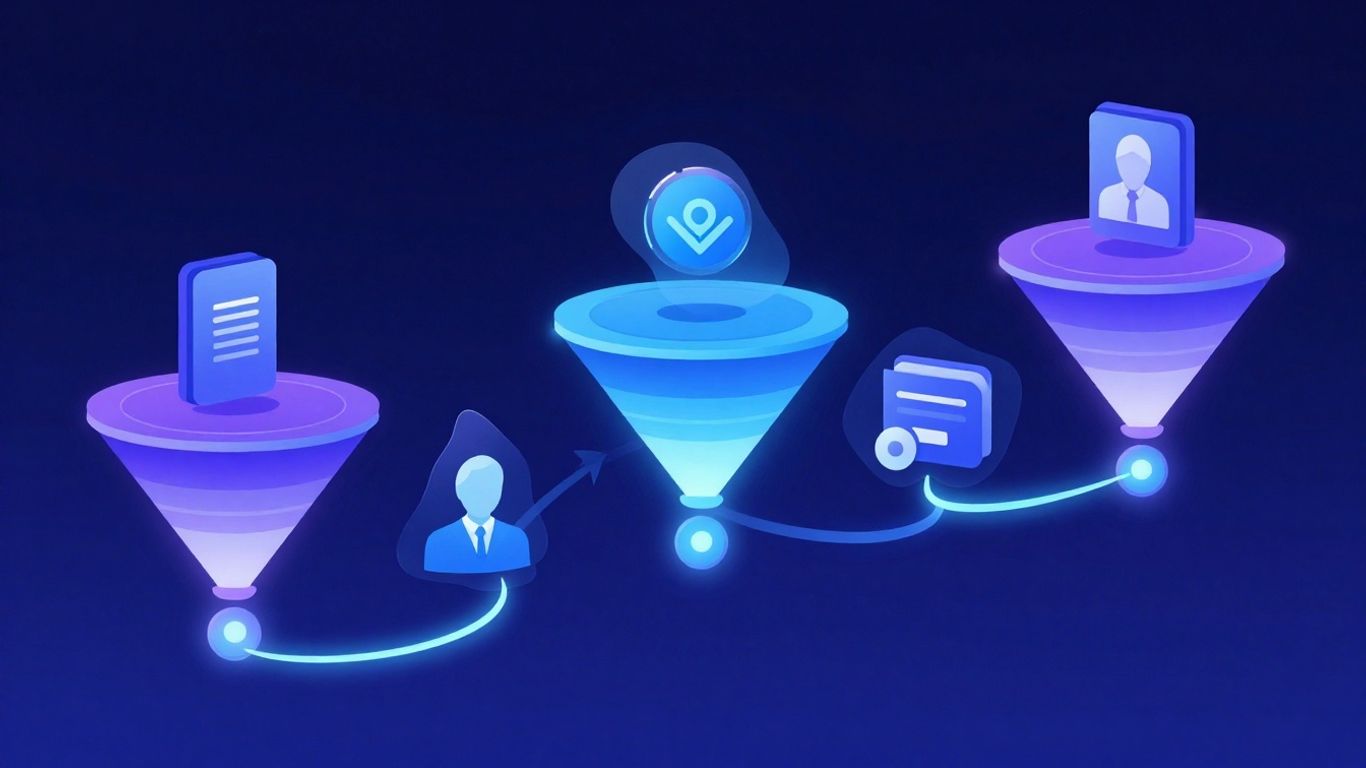
Think about all the repetitive tasks you do in marketing. Sending follow-up emails, adding people to lists, posting on social media – it all adds up. Marketing funnel automation takes these jobs off your plate. It sets up systems that handle these tasks automatically, based on what a potential customer does. This means your team can stop worrying about the small stuff and focus on bigger picture ideas, like creating better products or figuring out new ways to reach people. It's about working smarter, not just harder.
When you automate your marketing funnel, you're not just saving time; you're also getting better at talking to people. Automation lets you send the right message to the right person at the right time. Imagine someone downloads a guide about a specific problem. Your automated system can then send them more information related to that problem, or introduce a solution you offer. This kind of targeted communication feels more personal and helpful, which makes people more likely to stick around and eventually buy something. It’s like having a helpful assistant for every single person who shows interest.
Automated funnels aren't magic; they're built from specific parts working together. Here’s a quick look at what makes them tick:
Building an automated marketing funnel requires a clear plan. You need to know who you're talking to and what you want them to do at each step. Without this roadmap, your automation might just end up sending random messages, which won't help anyone.
Before you even think about setting up those fancy automated emails or pop-ups, you need to lay some groundwork. Getting this part right makes everything else so much easier, and honestly, way more effective. It’s like building a house – you wouldn't start putting up walls without a solid foundation, right?
This is where you really get to know who you're talking to. Forget guessing; we're talking about digging in. Talk to your current customers – what do they like? What are their biggest headaches? Chat with your sales team too; they're on the front lines and know what objections come up. Based on all that, create detailed profiles of your ideal customers. Think about their age, what they do, what problems they're trying to solve, and what questions they keep asking.
But don't stop there. You've got to look at what everyone else is doing. Check out your competitors. What are they selling? How much does it cost? What's their vibe? Finding out what makes them tick helps you figure out how you can be different and better. This is how you make sure your message actually gets heard.
Okay, so you need tools for this. A good Customer Relationship Management (CRM) system is pretty much non-negotiable. It's not just a fancy address book; it keeps track of what people do, how interested they seem, and groups them based on what they have in common. When you pair that CRM with a marketing automation tool, you can build and manage your automated campaigns without losing your mind.
These tools let you send a series of messages automatically, usually emails, to people in your system. It's how you keep them engaged as they move through your funnel. Plus, good software gives you reports. You can see what's working, what's not, and where people are dropping off. This data is gold for making your campaigns better.
Here's a quick look at what to consider:
Your automated funnel is only as good as the content it sends out. You need a plan for what you're going to say, when you're going to say it, and who you're saying it to. This isn't just about sending random emails; it's about providing helpful information at the right time.
Think about the different stages of your funnel. What does someone need to know when they first hear about you? What information helps them decide if your product is right for them? What do they need to know right before they buy?
Your content needs to guide people naturally. It should answer their questions before they even ask them and build trust along the way. If your content feels forced or overly salesy too early, people will just tune out.
For example, at the top of the funnel, you might share blog posts or infographics that address common problems. As they get further down, you might send case studies or product comparisons. The goal is to be helpful, not just pushy. This thoughtful approach makes your automated system feel less like a robot and more like a helpful guide.
So, you've got the big picture of funnel automation down. Now, let's get into the nitty-gritty of actually building one that works. It’s not just about setting up emails and hoping for the best; it’s about creating a smooth journey for your potential customers. Think of it like setting up a helpful guide that anticipates what someone needs next, without being pushy.
First things first, you need something to draw people in. This is your lead magnet, and it has to be good. People are busy, and they won't just hand over their email address for anything. You need to offer something genuinely useful in exchange for their contact info. This could be a detailed guide, a checklist, a template, or even a short video that solves a specific problem for them. The key is that it needs to be highly relevant to what they're looking for and clearly show the value you provide. This initial exchange sets the tone for the entire relationship.
Here are some ideas for lead magnets:
Once you have your lead magnet, you need to build the actual campaign around it. This involves mapping out the steps a lead will take after they sign up. It’s about creating a series of communications that guide them along. You don't want to overwhelm them with sales pitches right away. Instead, focus on providing more value, answering their questions, and building trust. Think about what information they need at each stage, from initial awareness to making a purchase decision. A well-structured campaign feels natural, not robotic. You can use tools to help manage this, making sure the right message goes out at the right time. This is where you can really start to see the benefits of master marketing funnel automation.
Every piece of content in your funnel, from the lead magnet to follow-up emails, needs a clear call to action (CTA). What do you want the person to do next? Do you want them to download another resource, visit a specific page on your website, schedule a call, or make a purchase? Your CTAs need to be obvious and compelling. Use action-oriented language and make it easy for people to click. Sometimes, a simple button works best, while other times, a text link might fit better. It’s important to test different CTAs to see what gets the best response from your audience. Don't be afraid to be direct, but always make sure the action requested aligns with where they are in their journey.
Designing an automated funnel is like building a helpful assistant. It needs to understand your customer's needs, provide the right information at the right time, and guide them smoothly towards a solution without ever feeling intrusive. It's about thoughtful planning and consistent value delivery.
So, you've got your basic automated funnel set up. That's great! But to really make it sing, you need to get a bit more sophisticated. We're talking about tactics that make your funnel feel less like a robot and more like a helpful guide who actually gets what the customer needs.
This is where things get interesting. Instead of just sending out emails based on a schedule, you can make your automation react to what people actually do. Did someone click on a specific product link? Great, send them more info about that. Did they abandon their cart? Maybe a gentle reminder with a small discount is in order. These triggers make the whole experience feel way more relevant to the individual. It's like having a salesperson who remembers every detail about every customer.
Here are a few ideas:
When you're building out your automated sequences, you'll often choose between two main approaches: time-based and behaviour-based. Time-based is pretty straightforward – you set a schedule, and the emails go out at specific intervals. Think of a welcome series that goes out over a week.
Behaviour-based, on the other hand, is more dynamic. It waits for the user to take a specific action before moving to the next step. This can create much more personalized paths. For example, if a user downloads a guide on 'Topic A', they might get a different follow-up sequence than someone who downloaded a guide on 'Topic B'. You can even combine them – maybe send an email after 3 days, but if they click a link in that email, send the next email immediately instead of waiting.
People don't always follow a straight line, right? They might look at a product, then go away for a while, then come back. They might get interested, then get distracted. Your automated funnel needs to be smart enough to handle this. If someone isn't engaging with your emails, you don't want to keep hammering them with the same messages. Maybe they need a different approach, or maybe they're just not ready yet. You might put them into a 're-engagement' sequence or a segment that gets less frequent, more targeted communication.
The key here is to avoid making your customers feel like they're just another number. By paying attention to how people interact with your content and adjusting your automated sequences accordingly, you can build stronger relationships and guide them more effectively towards becoming a customer. It's about being present and helpful, not just persistent.
Think about it like this:
This kind of dynamic approach means your funnel is always working, but it's working smart, adapting to each person's journey.
So, you've got your marketing funnel automated, which is great. But how do you make sure it's actually working as well as it could be? That's where optimization comes in. It's not just about setting things up and forgetting them; it's about making them better over time. Think of it like tuning up a car – you want it running smoothly and efficiently.
Drip campaigns are a cornerstone of automated sales funnels. They're essentially a series of pre-written messages sent out automatically over time, based on when a prospect takes a specific action or reaches a certain point in their journey. The goal here is to nurture leads without being pushy. You're providing helpful information, building trust, and keeping your brand top-of-mind.
Not all leads are created equal, right? Some are ready to buy tomorrow, while others need a lot more convincing. Lead scoring helps you figure this out. You assign points to leads based on their actions – like visiting your pricing page, downloading a guide, or opening emails. The higher the score, the warmer the lead.
This scoring then feeds into your automation workflows. A lead hitting a certain score might trigger a special offer or a notification to your sales team. It means your sales folks can focus their energy on the prospects most likely to convert, rather than chasing cold leads.
Ultimately, the goal of all this automation and optimization is to get more people to become paying customers. This means looking at where people are dropping off in your funnel and figuring out why. Are your calls to action clear enough? Is the checkout process too complicated? Is the follow-up too slow?
Continuous monitoring and A/B testing different elements of your funnel – like email subject lines, landing page copy, or offer types – can reveal small changes that lead to big improvements in conversion rates over time. It's an ongoing process of refinement.
By using automation to personalize communication, score leads effectively, and consistently test and refine your approach, you can significantly boost the number of prospects who move through your sales funnel and become loyal customers. It’s about working smarter, not just harder.
So, you've put all this work into setting up your automated marketing funnels. That's awesome! But how do you know if it's actually working, right? It's not enough to just set it and forget it. You've got to keep an eye on things and figure out what's hitting the mark and what's not.
Think of your funnel like a garden. You plant the seeds, water them, and then you watch them grow. But you also need to check for weeds, make sure they're getting enough sun, and maybe even move them around if they're not thriving. That's what testing and monitoring your funnel is all about. You're looking at the numbers to see what's going on.
Here are some key things to keep tabs on:
You can't improve what you don't measure. Regularly digging into your funnel's performance data is the only way to spot leaks and opportunities for improvement. It's about making smart, data-driven decisions instead of just guessing.
Now, about making things run even smoother. It's not just about the automation software itself, but how it plays with your other tools. Your Customer Relationship Management (CRM) system, for example, is super important. If your marketing automation platform and your CRM aren't talking to each other properly, you're going to have data getting lost or duplicated, and that's a headache nobody needs.
Think about it: your sales team needs to see what marketing has been doing with a lead, and marketing needs to know if sales has followed up. When these systems are linked, that information flows back and forth, giving everyone a clearer picture. This means sales can reach out at the perfect moment, armed with all the right info, and marketing can adjust its messages based on what's actually happening on the sales floor.
Looking ahead, Artificial Intelligence (AI) is going to change the game even more. We're already seeing AI help with things like lead scoring, figuring out which leads are most likely to buy based on tons of data points. But it's going to get way more sophisticated.
Imagine AI predicting what a customer might need before they even know it themselves, or automatically adjusting your entire funnel in real-time based on global trends or even individual user behavior. We'll also see AI get better at creating personalized content at scale, making every interaction feel unique. It's all about making the funnel smarter, faster, and more effective by taking the guesswork out of the equation. It's pretty wild to think about, honestly.
So, we've gone over how setting up automated marketing funnels can really change things for your business. It's not just about saving time, though that's a big plus. It's about making sure the right message gets to the right person at the right moment, without you having to be there to push buttons all day. Remember, it takes some work to get it all set up right – picking the right tools, figuring out your content, and making sure everything talks to each other. But once it's running, it can seriously help you connect with people better and, you know, sell more stuff. Keep an eye on how things are going, tweak what needs tweaking, and you'll be well on your way to making your marketing work smarter, not just harder.
Think of a marketing funnel like a path that guides people from just hearing about your business to becoming a customer. Automation means using special tools to make this path run by itself. So, instead of you doing everything manually, the tools send the right messages and information to people at the right time, all on their own. It helps you connect with more people without you having to do all the work yourself.
Using automated funnels is like having a super-efficient helper for your marketing. It saves you a lot of time because it handles tasks like sending emails or social media posts automatically. This means you can focus on bigger ideas for your business. Plus, it helps you talk to customers in a way that feels more personal and keeps them interested, which can lead to more sales.
The main parts include getting people interested in the first place (like offering a free guide), then keeping them interested by sending helpful information (like emails that explain more), and finally, encouraging them to buy something (like a special offer). You also need tools to manage all this, like software that sends emails and keeps track of people.
It's important to know who you're talking to. You can use information about your customers to send them messages that fit what they like or need. For example, if someone looked at a specific product, you can send them an email about that product. This is called personalization, and it makes people feel like you understand them better.
You need to watch how things are going. This means checking things like how many people are clicking on your links, how many are signing up for things, and how many end up buying. By looking at these numbers, you can see what's working and what's not, and then make changes to make it even better. It's like fine-tuning an engine to run smoother.
The future looks really smart! We'll see more 'artificial intelligence' (AI) helping out. AI can learn from how people act and predict what they might do next, making the automated messages even more spot-on. This means your marketing will become even more personalized and effective, helping you connect with customers in even cooler ways.